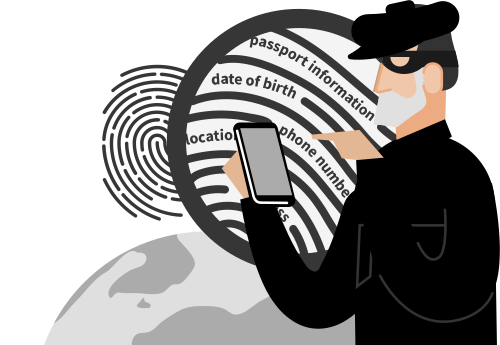
Social Engineering: Manipulating People to Gain Access
Nissy Ho
Jakarta, cssmayo.com – Social Engineering is a cybersecurity threat technique that relies on manipulating people rather than breaking technical defenses directly. Instead of attacking software or hardware first, the attacker targets human trust, curiosity, fear, urgency, or routine behavior to gain access to systems, information, or physical spaces. It is one of the most effective forms of attack because people are often easier to influence than machines are to exploit.
What makes Social Engineering especially dangerous is that it can bypass strong security tools when a person is persuaded to cooperate, even unintentionally. A convincing email, a fake phone call, a fraudulent login page, or a well-timed message can lead someone to reveal credentials, transfer money, install malware, or open restricted access. In other words, the attacker does not always need to hack the system when they can persuade someone to open the door for them.
What Social Engineering Is
Social Engineering refers to deceptive tactics used to manipulate individuals into giving up confidential information, granting access, or performing actions that benefit an attacker. It focuses on exploiting human psychology rather than technical vulnerabilities alone.
Common goals of social engineering attacks include:
Stealing usernames and passwords
Accessing confidential business data
Tricking users into sending money
Installing malicious software
Entering secure physical locations
Gaining trust for deeper future attacks
This makes social engineering a broad and adaptable threat category.
Why Social Engineering Matters
Social Engineering matters because even well-protected systems can be compromised if users are deceived into helping the attacker. It turns ordinary communication into a possible attack channel.
Human Vulnerability
Attackers exploit emotions such as fear, urgency, helpfulness, and trust.
Broad Attack Surface
Email, phone calls, text messages, social media, and in-person contact can all be used.
Low Technical Barrier
Many attacks do not require advanced technical tools to begin.
High Success Potential
A single successful interaction can lead to major compromise.
Business Impact
Social engineering can cause data breaches, fraud, downtime, and reputational damage.
These factors make it a central concern in cybersecurity awareness and risk management.
Common Types of Social Engineering
Social Engineering appears in several forms, each designed to manipulate behavior in different ways.
Type
Description
Typical Goal
Phishing
Fraudulent messages posing as legitimate sources
Steal credentials or deliver malware
Spear phishing
Targeted phishing aimed at specific individuals
Increase credibility and success rate
Pretexting
Fabricated story used to gain trust or information
Extract sensitive data
Baiting
Offering something enticing, such as a file or device
Trigger unsafe action
Tailgating
Following authorized people into secure areas
Gain physical access
These methods differ in execution, but all rely on manipulating human judgment.
How Social Engineering Works
The effectiveness of Social Engineering usually comes from careful timing, believable context, and psychological pressure. Attackers often study their targets before making contact.
Typical attack patterns include:
Creating urgency to limit careful thinking
Impersonating authority figures or trusted brands
Using fear of consequences
Exploiting curiosity or reward
Taking advantage of routine habits
Requesting small actions that lead to larger compromise
This is why social engineering often feels ordinary at first. The attack is designed to look familiar, reasonable, and time-sensitive.
How to Defend Against Social Engineering
Protection against Social Engineering depends heavily on awareness, verification, and process discipline. Technology helps, but user behavior remains critical.
Effective defenses include:
Verifying unexpected requests through trusted channels
Checking email addresses, URLs, and message details carefully
Avoiding impulsive responses to urgent demands
Using multi-factor authentication
Training staff regularly on attack tactics
Limiting access privileges
Reporting suspicious messages quickly
These practices reduce the chance that manipulation will succeed.
Final Thoughts
Social Engineering is a powerful attack method because it targets the human side of security rather than technical systems alone. By exploiting trust, urgency, and everyday behavior, attackers can gain access that might be difficult to achieve through direct technical intrusion.
The key takeaway is simple. Social Engineering succeeds when manipulation defeats caution, which is why awareness, verification, and disciplined security habits are essential forms of defense.
Explore our “Techno” category for more insightful content!