Public Key: Understanding Asymmetric Cryptography for Secure Communications
Nissy Ho
Jakarta, cssmayo.com – In the realm of cybersecurity, public key cryptography, also known as asymmetric cryptography, plays a crucial role in ensuring secure communications over the internet. This method of encryption utilizes a pair of keys—a public key and a private key—to facilitate secure data exchange, authentication, and digital signatures. In this article, we will explore the fundamentals of public key cryptography, its applications, advantages, and how it enhances security in digital communications.
What is Public Key Cryptography?
Public key cryptography is a cryptographic system that uses two keys for encryption and decryption:
Public Key: This key is shared openly and can be distributed to anyone. It is used to encrypt messages or verify digital signatures.
Private Key: This key is kept secret by the owner and is used to decrypt messages or create digital signatures. Only the key holder has access to this key.
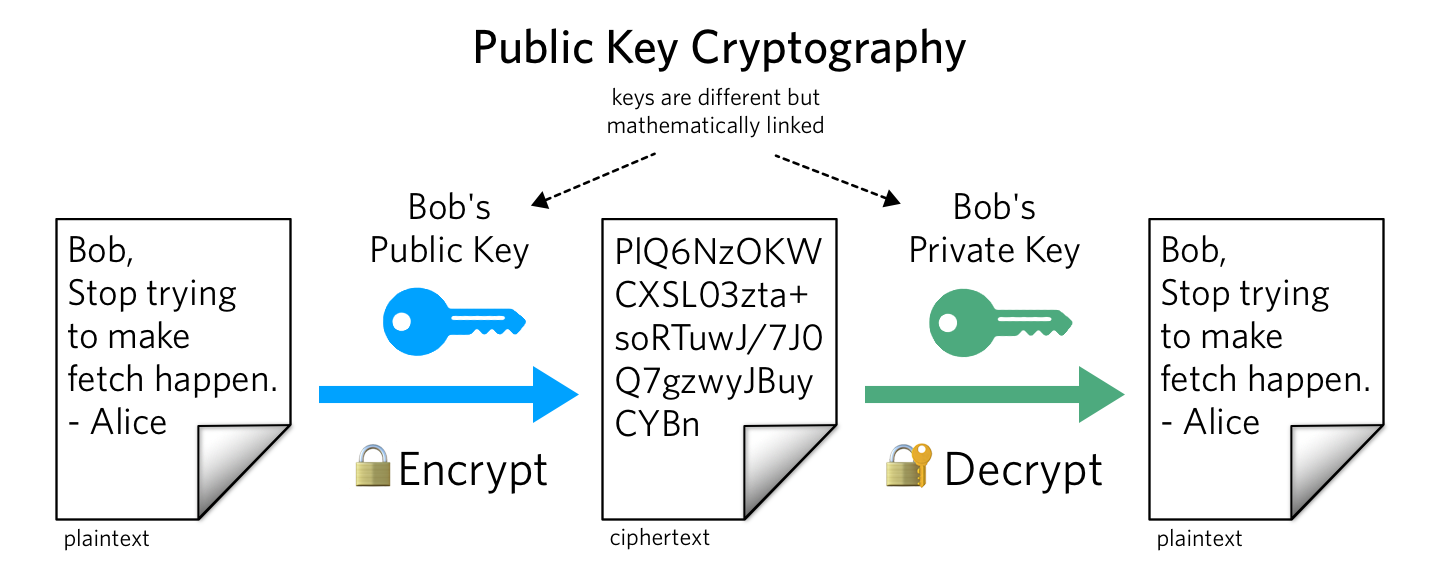
The relationship between the public and private keys is mathematically linked; data encrypted with the public key can only be decrypted with the corresponding private key, and vice versa. This unique feature distinguishes public key cryptography from symmetric encryption, which uses a single key for both encryption and decryption.
How Public Key Cryptography Works
The process of public key cryptography can be broken down into several key steps:
1. Key Generation
The first step involves generating a pair of keys (public and private). This is typically done using complex mathematical algorithms, such as RSA (Rivest-Shamir-Adleman) or ECC (Elliptic Curve Cryptography). The strength of the encryption depends on the length and complexity of the keys.
2. Encryption
To secure a message, the sender encrypts it with the recipient’s public key. This ensures that only the recipient, who possesses the corresponding private key, can decrypt and read the message.
3. Decryption
When the encrypted message reaches the recipient, they employ their private key for decryption; since that key is never shared, no one else can access the underlying text.
4. Digital Signatures
Public key cryptography also enables the use of digital signatures. When a sender signs a message with their private key, anyone can verify the signature using the sender’s public key. This process ensures the authenticity and integrity of the message, confirming that it has not been altered and that it comes from the claimed sender.
Applications of Public Key Cryptography
Public key cryptography is widely used across various applications, enhancing security in numerous digital interactions:
1. Secure Communications
Public key cryptography is fundamental to securing communications over the internet. Protocols such as HTTPS (Hypertext Transfer Protocol Secure) utilize public key infrastructure (PKI) to encrypt data exchanged between web browsers and servers, protecting sensitive information like credit card numbers and personal data.
2. Email Encryption
Email services often use public key cryptography to encrypt messages. Tools like PGP (Pretty Good Privacy) and GPG (GNU Privacy Guard) allow users to send encrypted emails, ensuring that only the intended recipient can read the contents.
3. Digital Certificates
Digital certificates, issued by Certificate Authorities (CAs), use public key cryptography to verify the identity of individuals, organizations, or devices. These certificates are essential for establishing trust in online transactions and communications.
4. Blockchain and Cryptocurrencies
Public key cryptography is a cornerstone of blockchain technology and cryptocurrencies like Bitcoin. Each user has a public key (which serves as their wallet address) and a private key (used to sign transactions), ensuring secure and verifiable transactions.
Advantages of Public Key Cryptography
Public key cryptography offers several advantages over traditional symmetric encryption methods:
1. Enhanced Security
Employing both a public and private key enhances security: even if everyone has the public key, only the holder of the secret private key can unlock the message.
2. Simplified Key Management
Public key cryptography eliminates the need for secure key exchange protocols required in symmetric encryption. Users can freely share their public keys without compromising security.
3. Non-repudiation
Digital signatures provide non-repudiation, meaning that a sender cannot deny having sent a message. This feature is crucial for legal and financial transactions, where accountability is essential.
4. Scalability
Public key cryptography is highly scalable, making it suitable for large networks and systems. Each user only needs to manage their own private key while freely sharing their public key with others.
Challenges and Considerations
Despite its advantages, public key cryptography is not without challenges:
1. Key Management
While public keys can be shared openly, managing private keys securely is critical. If a private key is lost or compromised, the security of the encrypted data is at risk.
2. Performance
Public key cryptography is generally slower than symmetric encryption due to the complex mathematical operations involved. For large data transfers, it is often combined with symmetric encryption, where a symmetric key is generated for the session and encrypted with the public key.
3. Trust Issues
The security of public key cryptography relies on the trustworthiness of Certificate Authorities and the integrity of digital certificates. Compromises or mismanagement of CAs can lead to security vulnerabilities.
Conclusion
Public key cryptography is a foundational technology for secure communications in the digital age. By utilizing a pair of keys, it enables secure data exchange, authentication, and digital signatures, significantly enhancing the security of online interactions. As cyber threats continue to evolve, understanding and implementing public key cryptography will remain essential for Ensuring the Confidentiality, integrity, and Authenticity of sensitive information.
Explore our “Techno” category for more insightful content!