



Jakarta, cssmayo.com – Less Preprocessor is a CSS extension language that helps developers write more maintainable, reusable, and organized stylesheets. By adding features such as variables, mixins, nesting, functions, and operations, Less makes it easier to manage styling logic that would otherwise become repetitive or difficult to scale in plain CSS. In front-end development, especially for larger interfaces, these capabilities help improve efficiency and reduce manual duplication across stylesheets.
What makes Less Preprocessor especially useful is its ability to bring structure and programming-like convenience to CSS without changing the final output format used by browsers. Developers write in Less syntax, then compile that code into standard CSS for deployment. This creates a workflow where design values, repeated patterns, and component-level rules can be managed more cleanly. In short, it lets CSS behave a little less like a stubborn pile of declarations and a little more like an organized system.
What Less Preprocessor Is
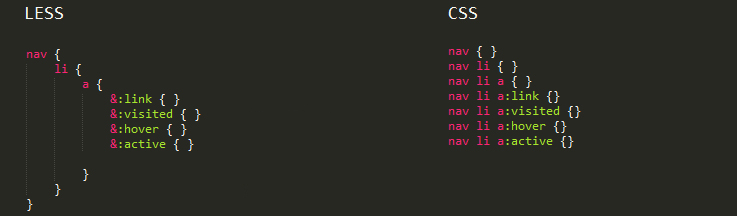

Less Preprocessor is a stylesheet preprocessor that extends standard CSS with extra features designed to improve development speed and code maintainability. It allows developers to define reusable variables for colors, spacing, or typography, create mixins for repeated rule sets, nest selectors for clarity, and perform calculations directly within stylesheets. These additions make large or evolving style systems easier to write and update.
Common features associated with Less Preprocessor include:
- Variables for reusable values
- Mixins for repeated style patterns
- Nested rules for cleaner structure
- Mathematical operations in stylesheets
- Functions for dynamic style generation
- Better code organization
- Easier maintenance of large CSS codebases
- Compilation into standard browser-readable CSS
These features explain why Less Preprocessor became an important tool in scalable front-end styling workflows.
Why Less Preprocessor Matters
Less Preprocessor matters because plain CSS can become difficult to manage as projects grow.
Reusability
Variables and mixins reduce repetition and make style systems easier to maintain.
Readability
Nesting and structured organization help developers understand relationships between selectors.
Maintainability
Changing a shared value in one place can update styles across an entire project.
Productivity
Developers can write less repetitive code and manage styles more efficiently.
Scalable Styling
It supports larger projects where consistency and modularity matter.
These strengths explain why Less Preprocessor has remained useful in stylesheet management.
Core Characteristics of Less Preprocessor
Its value becomes clearer when its main capabilities are viewed together.
| Characteristic | Description | Why It Matters |
|---|---|---|
| Variables | Store reusable values such as colors and spacing | Improves consistency and easier updates |
| Mixins | Reuse blocks of style declarations | Reduces duplication |
| Nesting | Place related selectors within one another | Improves structure and readability |
| Operations | Perform calculations in stylesheets | Simplifies dynamic sizing and spacing |
| CSS compilation | Converts Less code into standard CSS | Ensures browser compatibility |
Together, these characteristics show why Less Preprocessor helps simplify CSS development.
How Less Preprocessor Is Commonly Applied
Less Preprocessor is commonly applied in front-end projects that require better stylesheet organization, especially websites and applications with shared design patterns, multiple components, or evolving visual systems. It has often been used in UI frameworks, enterprise dashboards, reusable theme systems, and projects where developers need a more maintainable styling workflow than plain CSS alone can provide. Less can be integrated into build pipelines through task runners, bundlers, or framework tooling that compiles source files into deployable CSS.
It is especially associated with:
- Modular stylesheet development
- Reusable design systems
- Front-end build workflows
- Theme customization
- UI framework styling
- Large-scale CSS maintenance
- Cleaner and more efficient stylesheet authoring
This broad application range shows how Less Preprocessor supports more manageable and scalable CSS development.
Challenges of Using Less Preprocessor
While Less Preprocessor offers important benefits, it also comes with trade-offs.
Build Step Requirement
Less must be compiled into CSS, which adds tooling and workflow dependencies.
Learning Curve
Developers must understand Less syntax and features beyond standard CSS.
Debugging Complexity
Tracing compiled CSS back to source Less files can sometimes be less straightforward.
Dependency on Tooling
Projects need a proper build setup to handle preprocessing consistently.
Reduced Necessity in Modern CSS
Some features once exclusive to preprocessors are now partially available in newer CSS standards.
These trade-offs show that Less Preprocessor remains useful, but its value depends on project scale and workflow needs.
Why It Remains Important
Less Preprocessor remains important because many development teams still need structured, reusable, and maintainable styling systems. Even as native CSS evolves, preprocessors continue to offer convenience and workflow benefits that improve consistency across larger codebases. Less remains especially relevant in legacy projects, established UI frameworks, and teams that prefer its syntax and compilation model. It provides a practical way to manage complexity in stylesheet architecture without abandoning standard CSS output.
It continues to stand out because it provides:
- Cleaner stylesheet organization
- Reusable variables and mixins
- More efficient CSS maintenance
- Better scalability for larger projects
- A practical bridge between raw CSS and structured styling logic
This is why Less Preprocessor remains a useful tool for simplifying CSS with variables and mixins.
Final Thoughts
Less Preprocessor highlights the value of bringing structure and reuse into front-end styling. Its strength lies in helping developers write cleaner, more manageable CSS through variables, mixins, nesting, and compiled workflows. Whether used in legacy systems, scalable UI projects, or organized design architectures, Less continues to offer a practical way to simplify stylesheet development and reduce repetitive code.
The key takeaway is simple. Less Preprocessor matters because it helps developers manage CSS more efficiently by introducing reusable logic and cleaner structure into stylesheet authoring.
Explore our “”Techno“” category for more insightful content!
Don't forget to check out our previous article: Linkerd Mesh: Implementing Linkerd for Lightweight Microservice Observability

