JAKARTA, cssmayo.com – Ever wonder how Desalination Tech: Turning Saltwater into fresh water might change lives here in Indonesia? I’ve been super curious too, especially living in a city that knows a thing or two about water shortages. Let me spill the real tea from my techie journey, some wins, some fails, but always learning.
Staring out at the endless horizon of the Java Sea, it’s easy to forget that water scarcity presses on communities from the smallest fishing villages to the sprawling megacities of Southeast Asia. Desalination—once the realm of oil-rich kingdoms and high-end resorts—has evolved into a versatile toolkit for turning brine into opportunity. But behind every gleaming membrane and steam-driven still lie trade-offs, innovations, and real-world challenges that shape how we’ll power the next wave of fresh water production.
From Thermal Boilers to Nanofiltration: A Spectrum of Solutions
Desalination technologies span a continuum:
- Thermal Distillation
– Multi-Stage Flash (MSF) and Multi-Effect Distillation (MED) use heat to evaporate seawater, condense the vapor, and harvest pure water. Though proven at gigaliter scales, they remain energy-intensive, often tied to co-located power plants and reliant on cheap fossil heat. - Reverse Osmosis (RO)
– Today’s workhorse, RO forces seawater through semi-permeable membranes under pressures of 60–80 bar. Energy Recovery Devices (ERDs) like pressure exchangers recapture up to 60% of that input, driving specific energy consumption down toward 3 – 3.5 kWh/m³. Yet membranes foul with organic matter and biofilms, demanding smart pretreatment and periodic chemical cleaning. - Emerging Membrane and Hybrid Approaches
– Graphene-Enhanced Membranes show promise for higher flux at lower pressures.
– Forward Osmosis swaps high pressure for osmotic gradients, pairing seawater with a draw solution that later releases pure water with minimal energy.
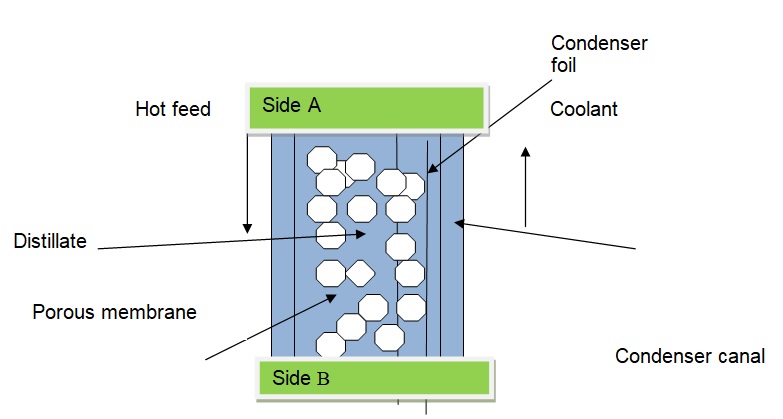
– Membrane Distillation leverages small temperature differentials—sometimes from waste heat or solar ponds—to drive vapor through hydrophobic membranes, sidestepping extreme pressures but requiring robust thermal management.
In practice, many plants blend methods: an RO train followed by low-grade heat in a membrane distillation stage, or an MSF unit tuned to handle brine concentrate from an upstream RO system. This hybrid mindset—mixing thermal and membrane—maximizes water recovery and leverages the cheapest energy gradient available on site.
The Water-Energy Nexus: Powering Desalination Sustainably
Desalination’s Achilles’ heel is energy. For every cubic meter of freshwater, you’re shifting tonnes of saltwater molecules against natural osmotic forces or vaporizing them outright. As grids decarbonize, the question becomes: can we align desalination with renewables?
- Solar-Thermal Desalination: In sun-rich regions, parabolic troughs can feed low-temperature MED units or membrane distillation modules. I’ve toured pilot sites where rooftop PV powers RO pumps by day, while solar ponds maintain gentle heat for nighttime membrane distillation.
- Wind-Powered RO: Coastal wind farms paired with battery buffers feed RO skids directly, shaving carbon footprints. Small islands in the Aegean and Indonesian archipelago are already experimenting with containerized RO units attached to local wind turbines, cutting diesel fuel imports.
- Waste-Heat Integration: Industrial parks and power-plant complexes can reroute flue-gas heat into MED or MSF stages, squeezing water out of the heat that would otherwise vanish up a stack.
Ultimately, the goal is to drive specific energy consumption below 2 kWh/m³—comparable to pumping groundwater from deep aquifers—while minimizing life-cycle emissions.
Brine Management: From Environmental Concern to Resource Opportunity
If producing fresh water is only half the battle, disposing of concentrated brine is the other. Simply dumping high-salinity effluent back to sea risks disrupting local marine ecosystems and raising salinity in lagooned areas.
- Zero Liquid Discharge (ZLD) systems push brine through crystallizers and mechanical vapor recompression, recovering salts and minerals—lithium, magnesium, even table salt—as byproducts. These modular ZLD units can be expensive, but they transform an environmental liability into a potential revenue stream.
- Constructed Evaporation Ponds leverage arid climates to passively concentrate brine until minerals precipitate. Though land-intensive, they’re proven in places like California’s Central Valley and Australia’s Pilbara.
- Subsurface Injection into deep geological formations hides the brine away from sensitive coastal zones. Careful hydrogeological surveys are essential to avoid contaminating freshwater aquifers.
Viewing brine as a raw material—for chlor-alkali production or salt harvesting—signals a shift from linear disposal to circular resource management.
Scaling and Social License: Navigating Costs, Communities, and Policy
Desalination plants cost tens to hundreds of millions of dollars per 100,000 m³/day of capacity. Financing often blends public–private partnerships with concessional loans. Policymakers must then set tariffs that reflect true costs without overburdening consumers—especially in water-stressed regions where affordability is vital.
Community engagement cannot be an afterthought. Coastal residents worry about intake structures sucking in fish larvae, or brine discharge heating local waters. Successful projects I’ve visited host regular town-hall forums, deploy fish-friendly intake screens, and commission independent environmental monitoring.
Regulatory frameworks need to adapt as well:
- Clear environmental permits for brine concentration limits.
- Incentives for renewable-powered desalination.
- Standards for reclaimed water reuse in agriculture and industry.
Only with transparent governance and shared benefits can desalination earn broad acceptance.
Charting the Future: Modular, Smart, and Decentralized
The next frontier of desalination tech points toward:
- Smart Control Systems that optimize membrane cleaning cycles, adjust pressures in real time to feedwater quality, and track energy flows minute-by-minute.
- Modular, Plug-and-Play Units that can be trucked to remote communities or rapidly deployed in disaster zones for emergency fresh-water supply.
- Synergies with Water Reuse: Urban wastewater treated to high standards can feed inland “desal” plants to alleviate coastal pressure and close urban water loops.
Our collective water challenges demand nothing less than continuous innovation—and careful system thinking. By marrying advances in materials science, renewable integration, brine valorization, and smart controls, Desalination Tech can evolve from a flagship engineering feat into an affordable, sustainable cornerstone of global water security.
Explore our “Techno” category for more insightful content!
Don't forget to check out our previous article: Grid Modernization: Upgrading Power Infrastructure with Technology