Jakarta, cssmayo.com – Deep Networks are advanced machine learning models made up of many layers of interconnected computational units that process data in increasingly abstract ways. They are a central part of modern artificial intelligence because they allow systems to learn complex patterns, make accurate predictions, and perform sophisticated tasks across vision, language, speech, and decision-making applications. By stacking multiple hidden layers, Deep Networks can extract higher-level features from raw data, making them especially powerful for difficult problems that traditional models struggle to solve.
What makes Deep Networks particularly important is their ability to improve representation learning. Instead of depending heavily on manual feature engineering, these models can automatically discover useful structures in large datasets. This has led to major progress in image classification, speech recognition, natural language processing, medical analysis, and generative AI. In short, Deep Networks help machines go from noticing data to understanding it well enough to do something impressive with it.
What Deep Networks Are
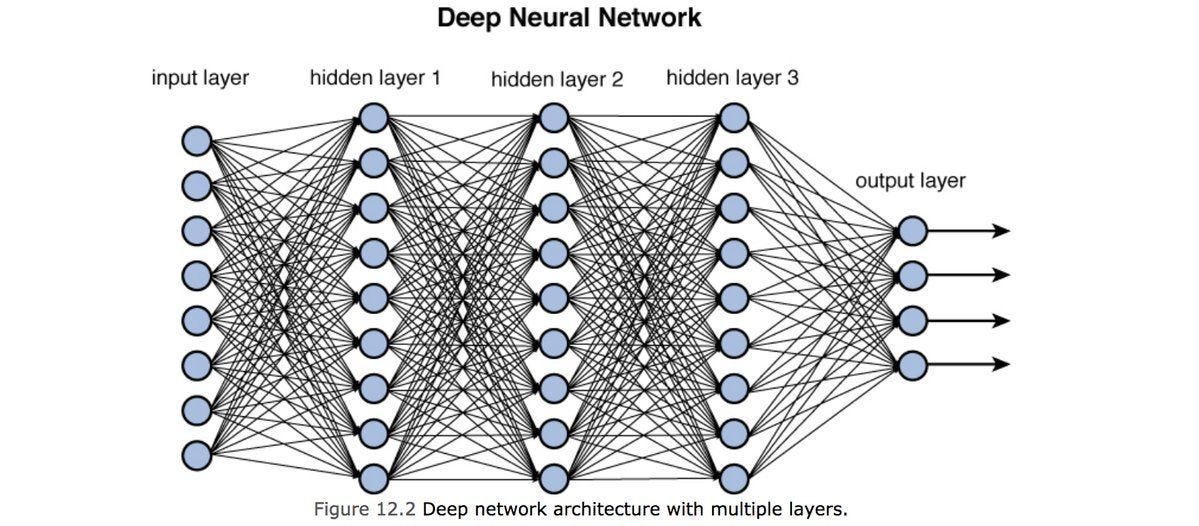
Deep Networks are neural network models that contain multiple hidden layers between the input and output stages. Each layer transforms the incoming information and passes it forward, allowing the system to build more detailed and abstract internal representations. During training, the model adjusts weights across these layers to reduce error and improve performance on a specific task.
Common features associated with Deep Networks include:
- Multiple hidden processing layers
- Hierarchical feature learning
- Data-driven training
- Strong pattern recognition ability
- High suitability for large datasets
- Use in deep learning systems
- Nonlinear modeling capability
- Broad applicability across domains
These features explain why Deep Networks are a foundational technology in modern AI.
Why Deep Networks Matter
Deep Networks matter because they enable AI systems to handle complexity at a level that simpler models often cannot match.
Better Feature Learning
They automatically learn layered representations from raw input data.
Higher Performance on Complex Tasks
They excel in areas such as vision, speech, and language understanding.
Reduced Manual Engineering
Less hand-crafted feature design is needed in many applications.
Scalability with Data
Their performance often improves with more training data and computing power.
Foundation for AI Innovation
Many breakthroughs in modern AI depend on deep network architectures.
These strengths explain why Deep Networks are so influential in intelligent system development.
Core Characteristics of Deep Networks
Their impact becomes clearer when their defining traits are viewed together.
| Characteristic | Description | Why It Matters |
|---|---|---|
| Multiple layers | Contains many hidden layers between input and output | Enables deeper representation learning |
| Hierarchical abstraction | Learns simple to complex features across layers | Improves understanding of raw data |
| Parameter optimization | Weights are tuned during training | Increases predictive accuracy |
| Nonlinear transformation | Captures complex data relationships | Expands model capability |
| Deep learning relevance | Forms the backbone of many modern AI systems | Supports advanced applications |
Together, these characteristics show why Deep Networks are both technically powerful and practically transformative.
How Deep Networks Are Commonly Applied
Deep Networks are commonly applied in image recognition, speech recognition, natural language processing, recommendation systems, fraud detection, autonomous driving, medical imaging, and generative AI. They are especially useful when tasks involve large-scale data, hidden patterns, or highly variable inputs that require robust feature extraction.
They are especially associated with:
- Computer vision models
- Language understanding systems
- Speech and audio processing
- Predictive analytics
- Medical diagnosis support
- Autonomous systems
- AI content generation
This wide application range shows how central Deep Networks have become to modern digital intelligence.
Why They Remain Important
Deep Networks remain important because AI systems are increasingly expected to perform tasks that require accuracy, adaptability, and sophisticated pattern recognition. As computational resources, model architectures, and training methods continue to improve, Deep Networks are becoming more capable and more efficient. They may not be magical, but they do make pattern extraction look suspiciously close to wizardry.
They continue to stand out because they provide:
- Strong learning capacity
- Improved performance on difficult tasks
- Reduced dependence on manual feature design
- Broad relevance across industries
- A foundation for continued AI progress
This is why Deep Networks continue to play a major role in advancing AI capabilities.
Final Thoughts
Deep Networks highlight the power of layered learning systems to transform raw data into meaningful insight and action. Their value lies in enabling machines to solve more complex problems with greater precision and adaptability than many earlier approaches allowed. Whether used in vision, language, prediction, or generative systems, Deep Networks remain a core technology shaping the future of artificial intelligence.
The key takeaway is simple. Deep Networks matter because they advance AI capabilities by enabling machines to learn deeper patterns, make smarter predictions, and perform more complex tasks.
Explore our “”Techno“” category for more insightful content!
Don't forget to check out our previous article: Voice Assistants: The Future of Hands-Free Technology