Jakarta, cssmayo.com – Fusion power represents one of the most promising avenues for sustainable and clean energy generation, emulating the processes that fuel the stars, including our sun. By harnessing the energy released during nuclear fusion, humanity aims to create a virtually limitless source of power that could revolutionize the global energy landscape. This article explores the principles of fusion power, its potential benefits, current research efforts, and the challenges that lie ahead.
Understanding Fusion Power
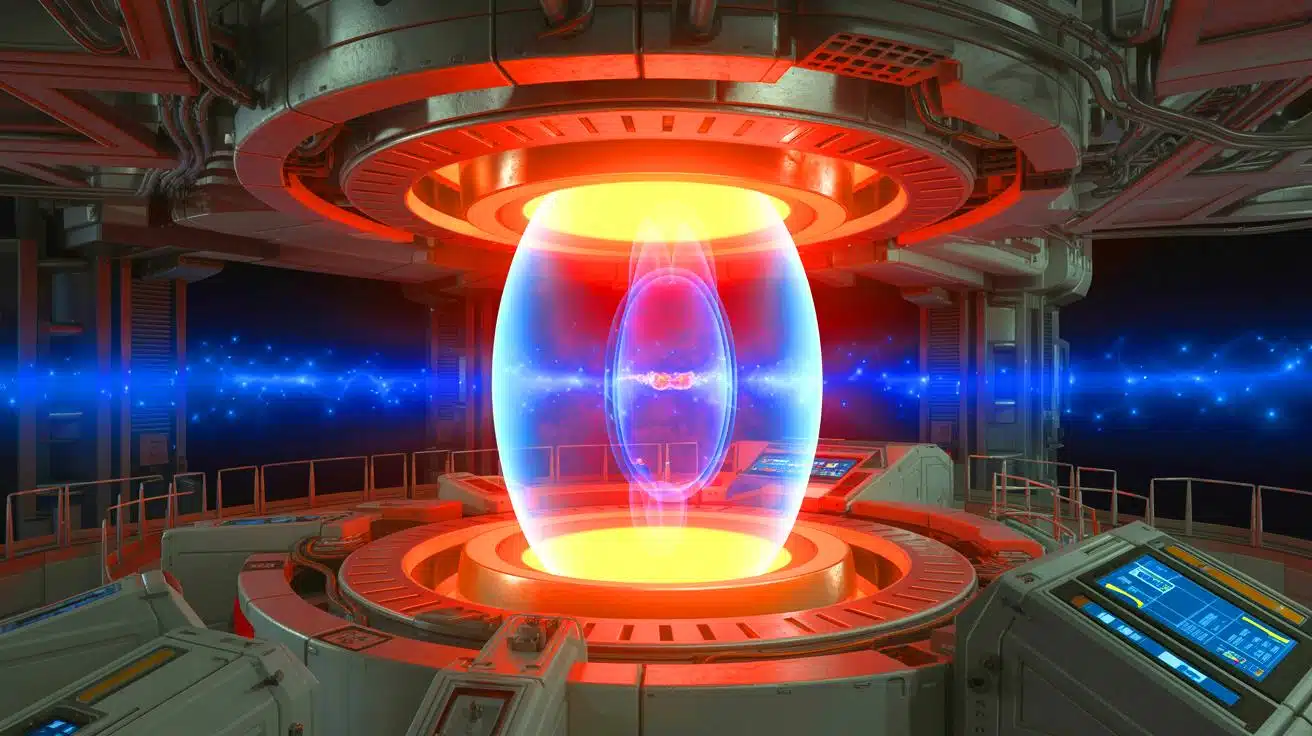
Fusion power merges light atomic nuclei into a heavier nucleus, releasing a substantial amount of energy. In stars, immense gravitational pressure and extreme temperatures force hydrogen atoms to fuse into helium, emitting energy that radiates outward as light and heat.
The Fusion Process
The most commonly studied fusion reaction for power generation involves isotopes of hydrogen, specifically deuterium and tritium. When these isotopes collide at extremely high temperatures (over 100 million degrees Celsius), they can overcome the electrostatic repulsion between their positively charged nuclei, resulting in fusion. The reaction can be summarized as follows:
D+T→He+n+Energy
In this equation, deuterium (D) and tritium (T) combine to form helium (He), release a neutron (n), and produce a substantial amount of energy.
Benefits of Fusion Power
Fusion power offers several advantages that make it an attractive alternative to conventional energy sources:
1. Abundant Fuel Supply
Deuterium and tritium, fusion’s primary fuels, occur in vast quantities. Deuterium is sourced from seawater, and tritium can be bred from abundant lithium. Their widespread availability guarantees a long-term fuel supply for fusion reactors.
2. Minimal Environmental Impact
Fusion power produces no greenhouse gas emissions during operation, making it an environmentally friendly energy source. Additionally, the waste generated from fusion reactions is significantly less hazardous than that produced by fission reactors, with much shorter half-lives.
3. High Energy Density
Fusion reactions release millions of times more energy than chemical reactions, such as those in fossil fuels. This high energy density means that a small amount of fuel can produce a large amount of energy, making fusion a highly efficient power source.
4. Safety and Stability
Fusion power plants would have inherent safety advantages over fission reactors. In the event of a malfunction, the conditions required for fusion cannot be maintained, leading to a natural shutdown of the reaction, thus eliminating the risk of catastrophic meltdowns.
Current Research and Developments
Significant progress has been made in fusion research, with various international projects and experimental reactors working towards achieving practical fusion energy. Some notable initiatives include:
1. ITER (International Thermonuclear Experimental Reactor)
Located in France, ITER is one of the most ambitious fusion research projects in history. It aims to demonstrate the feasibility of fusion as a large-scale and carbon-free energy source. ITER will use a tokamak design, a magnetic confinement system that holds plasma in place, allowing for sustained fusion reactions.
2. National Ignition Facility (NIF)
Based in the United States, the NIF focuses on inertial confinement fusion, using powerful lasers to compress and heat small pellets of fusion fuel. In 2021, NIF achieved a significant milestone by producing a record amount of energy from a fusion reaction, bringing researchers closer to achieving ignition.
3. Private Sector Initiatives
In recent years, private companies have entered the fusion research arena, developing innovative approaches to achieve fusion power. Companies like Helion Energy, TAE Technologies, and Commonwealth Fusion Systems are exploring new technologies and funding models to accelerate the development of commercial fusion reactors.
Challenges Facing Fusion Power
Despite its potential, several challenges must be addressed before fusion power can become a practical energy source:
1. Achieving Sustained Fusion
One of the primary challenges is achieving and maintaining the extreme temperatures and pressures required for sustained fusion reactions. Researchers must develop advanced materials and technologies to contain and control the plasma effectively.
2. Economic Viability
The development of fusion power plants requires substantial investment and time. Ensuring that fusion energy can compete with other energy sources in terms of cost will be critical for its widespread adoption.
3. Regulatory and Public Acceptance
As with any new technology, fusion power will need to navigate regulatory frameworks and public perceptions. Educating the public about the safety and benefits of fusion energy will be essential for gaining support.
Conclusion
Fusion power holds the promise of providing a clean, abundant, and sustainable energy source that could transform the global energy landscape. By mimicking the natural processes of the stars, fusion offers a path toward a future free from the environmental impacts of fossil fuels and the risks associated with nuclear fission. While significant challenges remain, ongoing research and technological advancements bring us closer to realizing the dream of harnessing fusion power for practical use. As the world seeks innovative solutions to meet its energy demands, fusion power stands out as a beacon of hope for a sustainable energy future.
Explore our “”Techno“” category for more insightful content!
Don't forget to check out our previous article: Radar Systems: Detecting Objects with Radio Waves
For further content, navigate to: FATCAI99