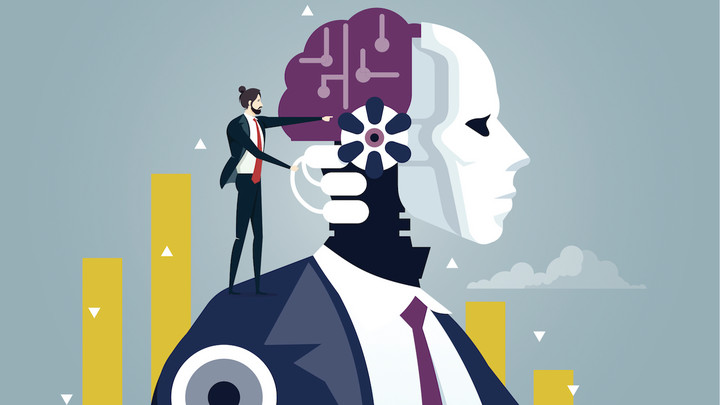
As organizations increasingly rely on algorithms for hiring, lending, healthcare, and criminal justice, the risk of algorithmic bias—and its societal consequences—grows ever more urgent. Algorithmic bias occurs when automated decision-making systems produce systematically unfair outcomes for certain groups. In this guide, you’ll discover why bias creeps into AI, real-world lessons, and a hands-on playbook for building fairer systems.
What Is Algorithmic Bias?

Algorithmic bias refers to systematic and repeatable errors in a computer system that create unfair outcomes, typically disadvantaging a particular social group. Bias can arise from:
- Data bias: Historical or sampling biases in the training data
- Algorithmic design: Choice of model, features, or objective functions
- Interaction bias: User behavior reinforcing stereotypes in online systems
- Evaluation bias: Inadequate testing on diverse populations
Bias manifests at multiple stages of the AI lifecycle—from data collection to model deployment—and can be explicit (overt prejudice) or implicit (subtle, unintentional).
Why Algorithmic Bias Matters More Than Ever
- Social Justice
• Biased algorithms can perpetuate discrimination in employment, credit, and law enforcement.
- Legal & Regulatory Risk
• Emerging regulations (e.g., EU AI Act, US Equal Credit Opportunity Act) penalize unfair automated decisions.
- Trust & Adoption
• Users and stakeholders reject “black-box” AI they perceive as unfair or opaque.
- Business Impact
• Wrongful denials, misclassifications, and reputational damage erode customer loyalty and revenue.
- Ethical Imperative
• As custodians of powerful technology, developers and organizations bear responsibility for equitable outcomes.
Real-World Revelations & Lessons Learned
- Revelation 1: Credit Scoring Gone Wrong
A machine-learning model denied loans disproportionately to minority applicants because historical data reflected decades of redlining. Retrospective bias audits and re-sampling fixed the skew.
- Revelation 2: Gender Bias in Hiring Tools
A resume-screening algorithm downgraded applications mentioning women’s colleges. We had to strip out gender-ed indicators and retrain with balanced samples.
- Revelation 3: Facial Recognition Failures
In a pilot program, facial recognition misidentified people with darker skin at a much higher rate. Introducing more diverse training datasets and fairness constraints reduced error disparities.
Core Challenges in Mitigating Bias
- Data Collection & Labeling
• Incomplete or non-representative datasets lead to blind spots.
- Feature Selection
• Proxy variables (e.g., ZIP code) can encode sensitive attributes like race or income.
- Model Complexity
• Deep models may hide discriminatory patterns in millions of parameters.
- Metric Selection
• Optimizing for accuracy alone can exacerbate group-specific errors.
- Organizational Silos
• Lack of cross-functional collaboration between data scientists, domain experts, and ethicists.
A Practical Framework for Fairer Algorithms
- Establish Ethical Principles
– Define fairness goals: demographic parity, equalized odds, or predictive equality.
- Audit & Describe Data
– Create “datasheets” documenting provenance, sampling methods, and known limitations.
- Detect Bias Early
– Use exploratory data analysis to check distributional differences across sensitive groups.
- Choose Fairness-Aware Techniques
– Pre-processing: re-weigh or resample data (e.g., SMOTE)
– In-processing: fairness-constrained training (e.g., adversarial debiasing)
– Post-processing: adjust decision thresholds per group
- Validate Across Subpopulations
– Measure performance (accuracy, false-positive/negative rates) separately for each cohort.
- Implement Human-in-the-Loop Controls
– Introduce manual review for high-stakes or borderline cases.
- Monitor & Iterate in Production
– Track drift in data distributions and fairness metrics; retrain or recalibrate models regularly.
Common Pitfalls & Remedies
- Pitfall: Optimizing a Single Fairness Metric
Remedy: Balance multiple criteria (e.g., equal opportunity vs. overall accuracy) and involve stakeholders in trade-off decisions.
- Pitfall: Ignoring Intersectionality
Remedy: Analyze combinations of sensitive attributes (e.g., race + gender) to uncover compounding biases.
- Pitfall: Overcorrecting & Reverse Bias
Remedy: Apply minimal adjustments needed to satisfy fairness goals; avoid sacrificing utility disproportionately for one group.
- Pitfall: Lack of Transparency
Remedy: Publish model cards and impact assessments; provide explainability tools (SHAP, LIME) for end users.
Tools & Resources
- Fairness Toolkits:
• IBM AI Fairness 360
• Google What-If Tool
- Explainability Libraries:
• LIME, SHAP, ELI5
- Auditing Frameworks:
• Aequitas, Fairlearn
- Data Documentation:
• Datasheets for Datasets, Model Cards (Google)
- Regulatory Guidelines:
• EU AI Act, U.S. Equal Credit Opportunity Act, IEEE P7003 – Bias Considerations
Emerging Trends & Future Directions
- Causal Fairness
• Leveraging causality to disentangle legitimate feature influence from discriminatory effects.
- Federated & Privacy-Preserving Learning
• Training across decentralized data silos, reducing sampling bias and privacy risks.
- AI Ethics Standards & Certification
• Industry-wide audit standards and “fairness seals” for trustworthy AI.
- Open-Source Audit Communities
• Crowdsourced bias detection and model red-teaming by independent researchers.
- Automated Bias Mitigation
• AutoML platforms with built-in fairness constraints and continuous auditing pipelines.
Conclusion
Addressing algorithmic bias is not optional—it’s essential for building responsible, trustworthy AI. By embedding fairness into every stage of the ML lifecycle—from data curation and model training to continuous monitoring—you’ll reduce discriminatory outcomes, comply with evolving regulations, and earn stakeholder trust. Start with small audits, iterate enhancements, and treat fairness as a core metric, not an afterthought.